Trump Warns Iran of More US Strikes as Strait of Hormuz Crisis Escalates
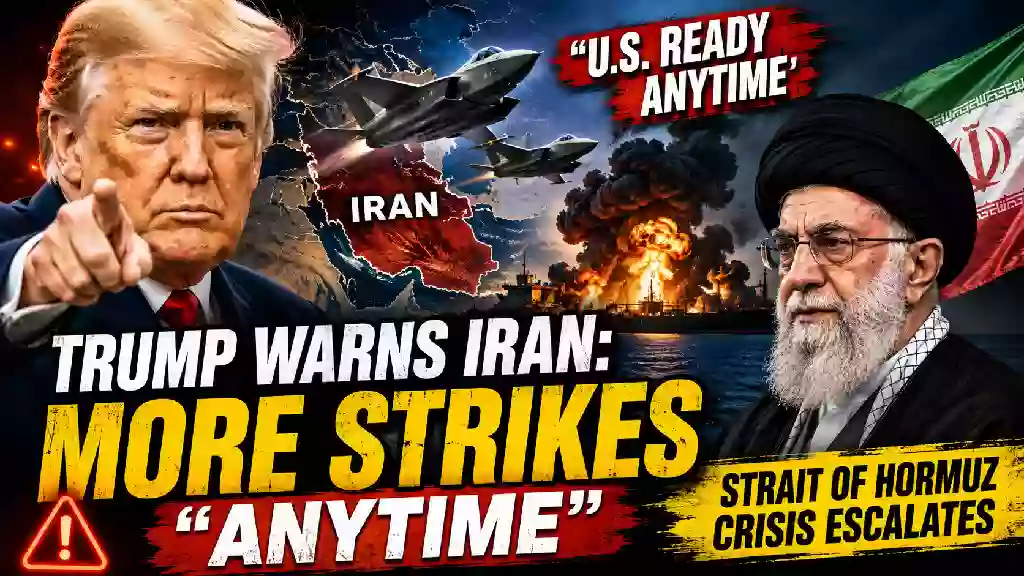
Trump warns that the U.S. is prepared for more strikes against Iran “anytime” as tensions escalate around the Strait of Hormuz, raising concerns over regional security and global oil supplies.
Trump Warns Iran of More US Strikes as Strait of Hormuz Crisis Escalates
Trump Warns Iran of More Strikes “Anytime” as Fighting Escalates Around Strait of Hormuz
President Donald Trump has issued a stark warning to Iran, saying the United States is prepared to launch another military strike “anytime” as tensions continue to rise around the strategically vital Strait of Hormuz.
Trump’s comments followed a major round of U.S. strikes against Iranian military infrastructure, including radar and missile-related systems. The renewed confrontation has raised fresh concerns about the future of the U.S.-Iran conflict, regional security and the global oil market.
Trump Signals More Military Action Could Come
Trump said American forces had carried out a heavy attack against Iranian military capabilities and claimed U.S. forces destroyed newly built equipment along the Strait of Hormuz.
According to the supplied report, Iran had been attempting to rebuild radar and missile systems and develop a rocket capable of deploying mines in the waterway. Trump said the United States targeted those capabilities before they could further threaten shipping.
The president also made clear that the latest operation should not necessarily be viewed as the final U.S. military action against Tehran.
“We’re prepared to do another one anytime we want,” Trump said, according to the report.
The remarks underline Washington’s continued willingness to use military force while maintaining economic pressure through sanctions.
Strait of Hormuz Becomes a Key Battleground
The Strait of Hormuz has become one of the most important flashpoints in the confrontation.
The narrow waterway is critical to global energy shipments, making any threat to commercial shipping a major concern for governments and financial markets. The supplied report says the United States has been targeting Iranian capabilities that could interfere with shipping in the area.
The U.S. is also maintaining a substantial military presence in the region. The report cites a Wall Street Journal estimate of approximately 50,000 American troops, giving the White House additional options as the conflict develops.
Oil Prices Add Pressure on Washington
Energy security is another major factor shaping the U.S. strategy.
The report says oil flows through the Strait had recovered to approximately two-thirds of their pre-war levels, while overland shipments had increased. Those developments could help reduce pressure on global energy markets.
However, renewed fighting has continued to create uncertainty for oil traders. Recent Reuters reporting said Brent crude climbed to around $97 a barrel as investors reacted to the latest U.S.-Iran escalation and concerns about disrupted Middle Eastern supplies.
Keeping oil moving through the region is therefore a major strategic and economic objective.
Could the Iran Campaign Be Winding Down?
Despite Trump’s warning that more strikes could happen, the president has also suggested that the renewed military campaign will not continue indefinitely.
That creates a complicated picture for the future of the conflict. Washington appears prepared to maintain military pressure on Tehran while simultaneously signaling that the latest escalation could eventually come to an end.
A former special operations officer interviewed in the supplied report predicted that the conflict could continue into the fall, although he argued that events were moving in the administration’s direction.
Questions About Iran’s Government
The confrontation also raises broader questions about Iran’s political future.
Trump has repeatedly encouraged Iranians to challenge their government, but the extent of direct American involvement in any potential uprising remains unclear.
The analysis in the supplied report suggests that U.S. officials could be working with factions inside Iran, while also questioning whether a popular uprising would be strong enough to replace the government of a country with a population of roughly 90 million.
That means military pressure alone may not determine the eventual outcome.
A New Phase in the U.S.-Iran Conflict
Trump’s latest warning puts Tehran on notice that the United States retains the ability and willingness to conduct additional strikes.
At the same time, Washington faces difficult questions over how long military operations should continue, how to protect shipping through the Strait of Hormuz and how to prevent higher energy prices from spreading the economic impact of the conflict.
For Iran, the immediate challenge is rebuilding military capabilities while facing continued U.S. pressure. For the United States, the challenge is maintaining control of a critical regional shipping route without allowing the confrontation to develop into an even wider war.
With tensions still high, Trump’s warning of additional strikes, the security of the Strait of Hormuz, Iran’s military rebuilding efforts and global oil prices will remain key indicators of where the conflict goes next.
#Trump #Iran #USIran #IranWar #MiddleEast #StraitOfHormuz #TrumpNews #IranConflict #USMilitary #OilPrices #Geopolitics #BreakingNews